Mushroom Bibimbap
Korean mixed rice bowls topped with garlicky shiitake mushrooms, sesame spinach, carrots, cucumber and red cabbage, a runny fried egg and sweet, spicy gochujang sauce.

Bibimbap means "mixed rice", and that is exactly how you eat it: a bowl of warm rice topped with neat piles of seasoned vegetables and a fried egg, then stirred together with spicy-sweet gochujang sauce at the table. This vegetarian version uses meaty shiitake mushrooms, and it is as satisfying as any version with beef.
What is gochujang?
Gochujang is a thick, fermented Korean chili paste with a deep, savory, slightly sweet heat. Mixed with sesame oil, a little sugar and vinegar, it makes the sauce that ties bibimbap together. Look for it in red tubs in Asian grocery stores or the international aisle of most supermarkets.
Make it easier
- Cook in one pan. Sauté each vegetable in turn in the same skillet, wiping it out only if needed. Start with the mildest (spinach) and finish with the mushrooms.
- Use raw vegetables. Cucumber, red cabbage and carrots can be served raw and lightly seasoned instead of cooked.
- Prep ahead. All the toppings can be cooked a day ahead and served at room temperature, which is traditional.
Crispy rice
For dolsot bibimbap, the crispy-bottomed version served in hot stone bowls, heat a little sesame oil in a cast-iron skillet, press the rice into it and cook over medium heat for 8 to 10 minutes without stirring, until golden and crunchy underneath. Add the toppings and bring the pan to the table.
FAQ
Can I add meat?
Yes. Thinly sliced beef, marinated in soy sauce, sugar, garlic and sesame oil and seared quickly, is the most popular addition.
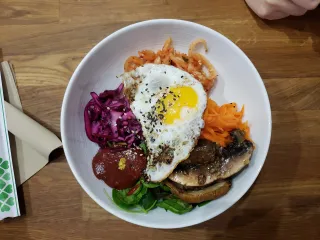
Mushroom Bibimbap
Ingredients
Gochujang sauce
Bowls
Conversions are rounded for convenience. For baking, use the original measurements where possible.
Instructions
Make the sauce
-
Stir all the sauce ingredients together until smooth. Set aside.
Cook the vegetables
-
Heat 1 teaspoon of the oil in a large skillet over medium heat. Add the spinach and half the garlic and cook for 1 to 2 minutes, until wilted. Squeeze out excess liquid, then toss with 1 teaspoon sesame oil and a pinch of salt. Set aside.
-
Add another teaspoon of oil and the carrots and cook for 2 to 3 minutes, until crisp-tender. Season with a pinch of salt and set aside.
-
Add 1 tablespoon of oil and the mushrooms and cook for 5 to 6 minutes, until browned. Add the remaining garlic and 1 tablespoon soy sauce and cook for 1 minute more.
-
Toss the cucumber with the remaining soy sauce and sesame oil.
Fry the eggs and assemble
-
Fry the eggs in the remaining oil over medium heat for 2 to 3 minutes, until the whites are set and the yolks are runny.
-
Divide the rice among 4 bowls. Arrange the spinach, carrots, mushrooms, cucumber, red cabbage and kimchi, if using, in sections on top.
-
Top each bowl with an egg and green onions. Serve with the gochujang sauce and mix everything together before eating.
Notes
- Gochujang brands vary in heat. Start with half the sauce and add more to taste.
Tips
- Day-old rice reheated until steaming works perfectly and is ideal for crispy-bottom bibimbap.
Substitutions
- Vegan: skip the egg and add pan-fried tofu.
- Vegetables: zucchini, bean sprouts, bell peppers or sautéed kale.
- Gluten-free: use tamari and check that your gochujang is gluten-free.
Storage and reheating
- Refrigerate the cooked vegetables and sauce in separate containers for up to 3 days. Cook the eggs fresh.
Reviews
No reviews yet. Made this recipe? Be the first to share how it went.
Leave a review
You might also like

Bowls
Salmon Poke Bowl

Breakfast & Brunch
Homemade Granola

Breakfast & Brunch
Huevos Rancheros

Breakfast & Brunch